2026-10-01 · Frank Morales
Signs of a Main Sewer Line Backup and How Professionals Restore It
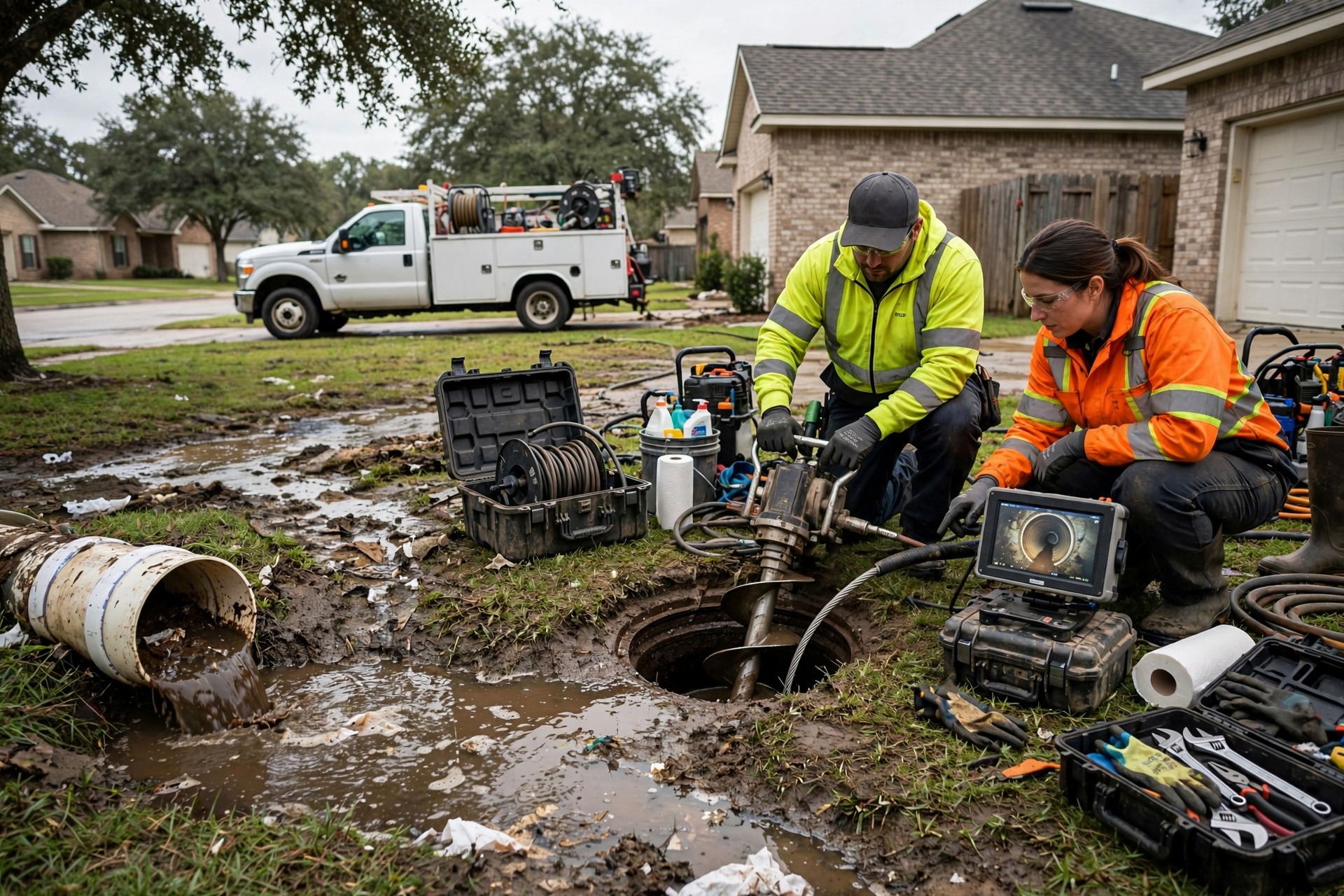
Multiple slow drains throughout a Rosenberg home, especially on the first floor, signal a main sewer line backup rather than an isolated fixture issue. Gurgling sounds from toilets or tubs when water runs elsewhere, sewage odors near floor drains, and water backing up in lower-level tubs during showers point to the same problem. In Fort Bend County homes built before 1980, tree roots from live oaks common near the Brazos River Park frequently invade clay or cast-iron lines. Restoration begins with camera inspection to locate the blockage, followed by hydro jetting or sectional repair, then thorough removal of contaminated materials.
Warning Signs Specific to Rosenberg Properties
Homes in Downtown Rosenberg and Rosenberg Heights often sit on older infrastructure where mild winters allow roots to grow year-round without frost damage. During hot humid summers, sewage backups produce stronger odors and faster bacterial growth because moisture lingers in the soil. Residents near the Fort Bend Museum or Brazos River Park report backups after heavy rains when the water table rises and pushes debris into aging pipes. Watch for sewage appearing in yard cleanouts or multiple toilets flushing slowly at once. These patterns differ from isolated clogs because they affect the entire main line serving the property.
How Professionals Locate and Clear the Blockage
Technicians start with a video camera fed through the cleanout at 5610 Farm-To-Market Rd 2218 or the property's exterior access point to map the line without excavation. Once the obstruction is identified, hydro jetting at 3,500–4,000 psi clears grease, roots, and scale from cast-iron or PVC lines common in Richmond and Sugar Land neighborhoods. In cases of collapsed sections, trenchless pipe bursting replaces the damaged segment while minimizing yard disruption. After clearing, crews verify flow with a second camera pass before moving to cleanup. This approach prevents repeated backups that plague properties near Millers Pond where soil shifts occur.
Restoration Steps After Clearing the Line
Once flow is restored, removal of affected drywall, flooring, and insulation prevents hidden mold growth that thrives in Rosenberg's humid summers. All porous materials contacting black water are discarded, while hard surfaces receive EPA-registered disinfectants. Sewage backup cleanup protocols include negative air machines to contain odors during drying. Properties in Kingdom Heights or Briarwood Crossing often require dehumidifiers running 72–96 hours because high ambient humidity slows moisture removal. Structural drying follows to bring moisture readings below 15 percent before reconstruction begins.
Preventing Future Backups in Fort Bend County
Annual camera inspections catch root intrusion early in areas with mature trees around the Rosenberg Railroad Museum. Avoid flushing wipes or pouring grease, which combine with clay soil to form stubborn clogs. Properties near sewer line backup hot spots benefit from backflow preventers installed at the main cleanout. After any event, full disinfection and sanitization reduces health risks from pathogens that survive longer in warm, moist conditions. The hidden dangers of black water explain why DIY attempts often leave residual contamination that reappears during the next rain.