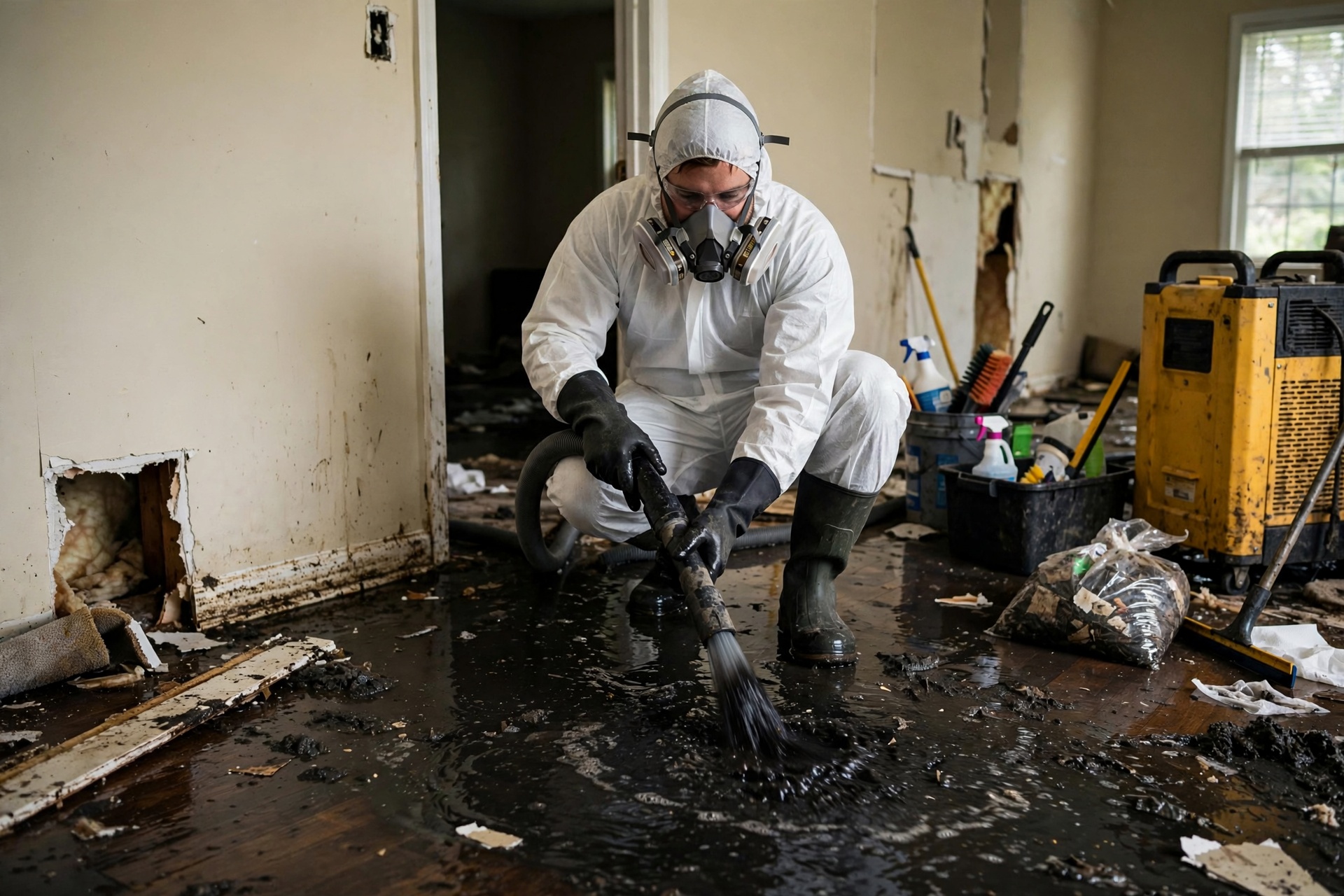
Black water represents the most hazardous category of water damage, containing dangerous pathogens, organic waste, and toxic chemicals. Our remediation protocol follows strict IICRC standards, utilizing full personal protective equipment, negative air containment, complete waste removal, and deep antimicrobial fogging across affected Rosenberg properties.
Properties near the Rosenberg Railroad Museum or Fort Bend Museum often sit on older plumbing lines that fail during heavy rains, sending black water into finished basements or crawl spaces. Removal includes lifting and discarding saturated carpet pads and baseboards while documenting every step for insurance adjusters. Mild winters extend the window for hidden moisture to migrate into wall cavities, so infrared moisture mapping is used on every job to locate pockets that air movers alone cannot reach.
Cleanup crews coordinate with local waste haulers to transport biohazard materials out of Fort Bend County rather than attempting on-site treatment that could affect nearby Sugar Land or Richmond drainage systems. Post-extraction verification includes ATP swab testing on concrete and wood surfaces to confirm bacterial reduction before reconstruction begins. Homeowners in Downtown Rosenberg frequently face repeat incidents when tree roots invade aging sewer laterals, requiring coordination with plumbers before final drying.
Technician insight
In Rosenberg, the thing that catches most people out with black water cleanup is how quickly humid summer air lets sewage odors travel through the balloon-framed walls of pre-1970 homes in Downtown Rosenberg; once it reaches the attic, the job doubles in scope because you have to treat every rafter instead of just the first floor.
Sewage Backup After Heavy Rain in Rosenberg Heights
A homeowner called after rainwater pushed sewage through an old cleanout near the Brazos River Park. Extraction revealed water had traveled under the slab into two bedrooms. Crews removed flooring, dried wall cavities, and applied antimicrobials before returning the home to normal use.
Black Water Cleanup Services We Offer
✓Basement Sewage Extraction
Removes standing black water and contaminated sludge from below-grade spaces common in Rosenberg Heights homes after river-adjacent flooding.
✓Contaminated Flooring Removal
Cuts out and disposes of saturated carpet, pad, and hardwood affected by sewage in older Downtown Rosenberg properties.
✓Wall Cavity Drying After Sewage
Deploys air movers and dehumidifiers to dry insulation and studs once black water has wicked up from slab leaks during humid summer conditions.
✓Biohazard Material Disposal
Packages and transports Category 3 waste to approved Fort Bend County facilities rather than leaving it on site near parks or museums.
✓Post-Flood Antimicrobial Treatment
Applies targeted disinfectants to concrete and wood surfaces in homes near the Brazos River Park to reduce lingering pathogens.
Black Water Cleanup Cost in Rosenberg, TX
| Service | Typical Range | What Affects It |
|---|---|---|
| Basement Extraction | $800–$2,200 | Varies with water depth and whether slab leaks require jackhammer access |
| Flooring and Pad Removal | $400–$1,100 | Higher in older homes with multiple layers of flooring |
| Wall Cavity Drying | $600–$1,800 | Increases with square footage and summer humidity levels |
| Full Biohazard Disposal | $350–$750 | Based on volume of waste and transport distance from Rosenberg |
Ranges are typical for Rosenberg, TX and confirmed with an exact written quote before any work starts.
How it works
- 1
Initial Assessment
Technicians arrive at the Rosenberg address, identify the sewage source, and map the full extent of contamination using moisture meters.
- 2
Containment Setup
Plastic barriers and negative air are installed to isolate affected zones in homes near Downtown Rosenberg from the rest of the structure.
- 3
Extraction and Removal
Standing water and saturated materials are removed and loaded for proper disposal outside Fort Bend County.
- 4
Drying and Verification
Equipment runs until readings drop below safe thresholds, followed by swab testing before any reconstruction.
Pricing
Costs depend on square footage affected, depth of contamination into subfloors, and time required for drying in humid conditions.