2026-10-01 · Frank Morales
Commercial Sewage Cleanup: Protecting Businesses, Workers, and Compliance
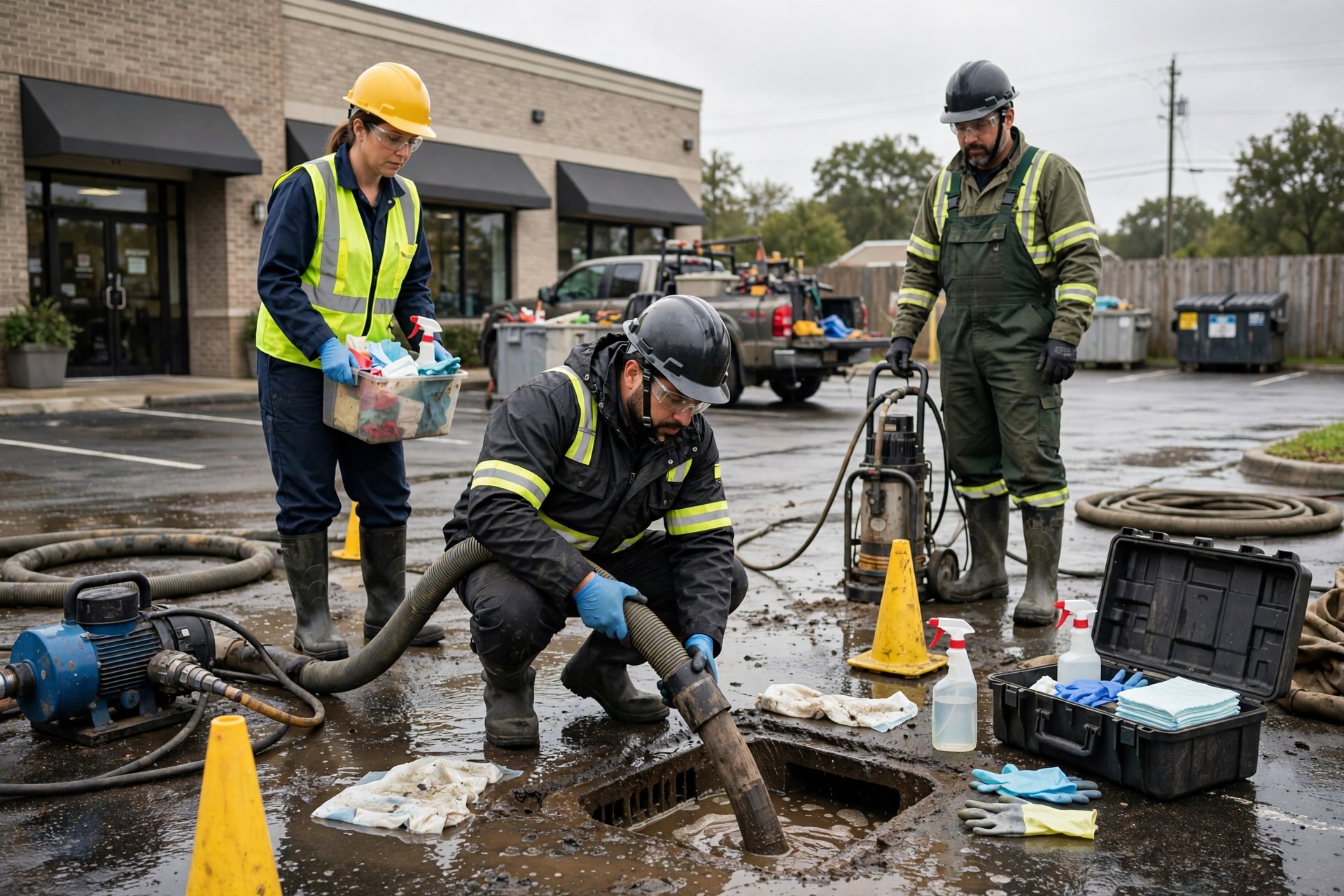
Commercial sewage cleanup in Rosenberg directly protects businesses by containing black water spread, shielding workers from pathogens, and keeping operations within Fort Bend County health codes. Failures here often lead to extended closures when humidity accelerates bacterial growth across retail floors or restaurant kitchens.
Worker Safety Protocols During Cleanup
Rosenberg summers push temperatures above 90 degrees with high humidity that keeps moisture trapped inside commercial walls and under slab foundations. Crews must wear full PPE including respirators rated for hydrogen sulfide and other sewer gases common in Fort Bend County backups. Staging decontamination zones at building entrances prevents cross-contamination into customer areas, especially critical for properties near the Rosenberg Railroad Museum that see steady foot traffic. Mild winters allow year-round work but still demand ventilation checks because indoor humidity rarely drops below 60 percent.
Meeting Fort Bend Compliance Standards
Texas health rules require documented removal of all contaminated porous materials and verification through ATP testing before reoccupancy. Businesses in Downtown Rosenberg often operate in structures built before 1980 that contain older plumbing prone to root intrusion from nearby live oaks. Skipping proper disposal steps can trigger citations from county inspectors, particularly after events that affect multiple tenants in Rosenberg Heights strip centers. Linking protocols to disinfection and sanitization ensures every surface meets measurable cleanliness thresholds rather than visual inspection alone.
Handling Sewage in Local Commercial Buildings
Terrain near the Brazos River Park creates occasional high water tables that push sewage upward through floor drains in low-lying retail spaces. Sugar Land and Richmond corridors share similar clay soils that slow drainage and prolong drying times after a line break. Crews address these by isolating HVAC systems early to stop odor migration into adjacent suites. Properties around the Fort Bend Museum face added challenges when backups reach historic wood floors that cannot tolerate aggressive demolition without structural review.
Practical Response Steps for Business Owners
First, shut off water sources and evacuate affected zones while documenting the incident with photos for insurance. Next, contact a team familiar with Rosenberg's municipal sewer maps to locate the failure point quickly. Then follow sequenced removal of standing water, followed by antimicrobial application and dehumidification calibrated to local humidity loads. Readers can review the hidden dangers of black water for deeper context on pathogen risks that appear in commercial settings. Finally, schedule post-cleanup odor verification using sewage odor removal methods proven effective in Fort Bend humidity before reopening.
Long-Term Protection After an Event
Installing backflow preventers and scheduling annual line scoping reduces repeat incidents in Rosenberg Heights restaurants and offices. Businesses located near 5610 Farm-To-Market Rd 2218 benefit from rapid local response times that limit exposure hours. Consistent record-keeping of each cleanup also supports future lease negotiations or sale inspections common in the area.