2026-10-01 · Frank Morales
Complete Disinfection and Sanitization After Wastewater Disasters
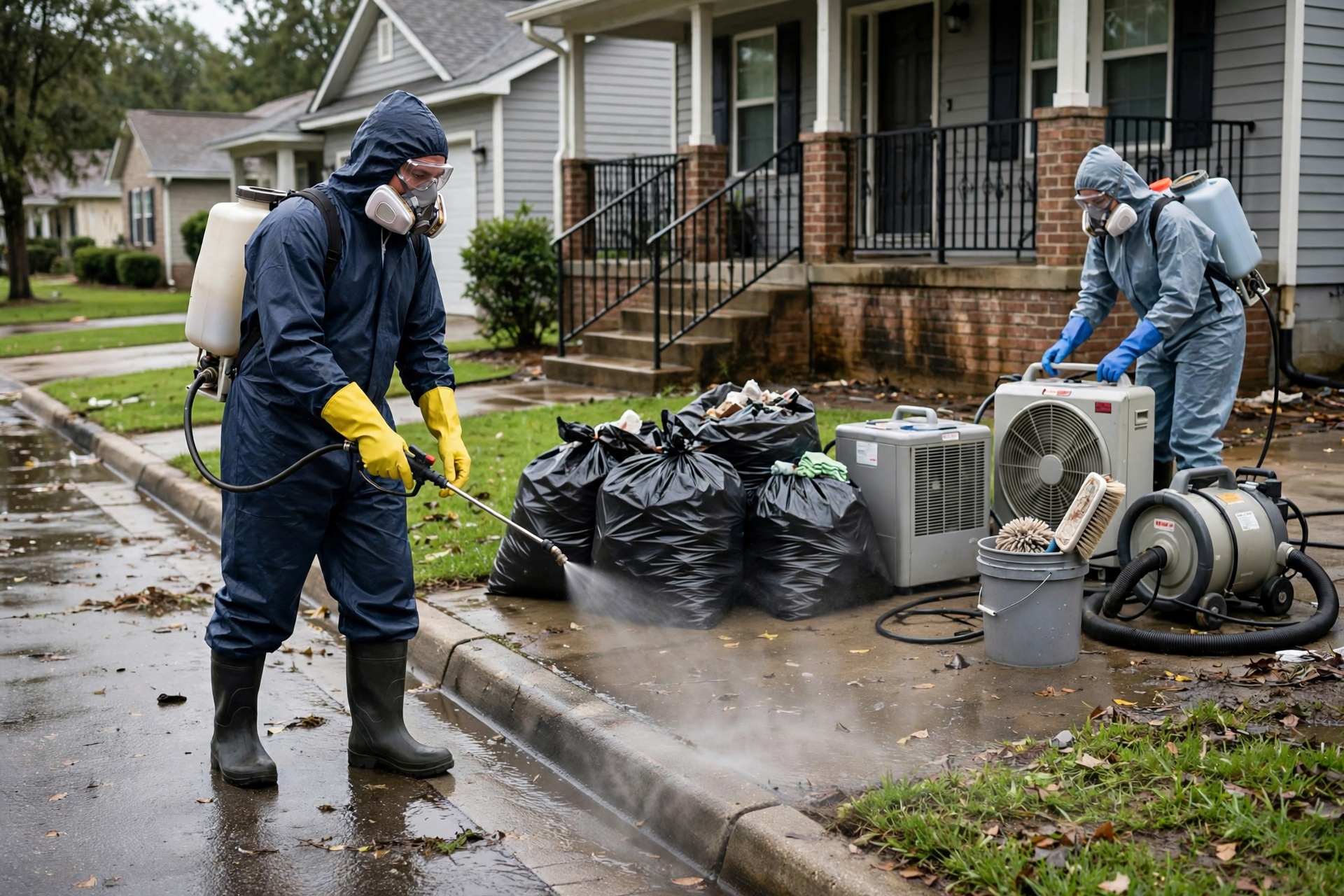
Complete disinfection and sanitization after wastewater disasters begins with isolating the affected zone, removing all standing black water and solids, then applying hospital-grade disinfectants followed by HEPA air scrubbing and moisture verification to below 15% readings. This sequence prevents cross-contamination into living spaces in Fort Bend County homes.
Initial Assessment and Containment
Technicians first map the migration path of wastewater through slabs, walls, and subfloors common in Rosenberg Heights and Downtown Rosenberg properties built before 1980. Standing water near the Brazos River Park or Fort Bend Museum areas often travels farther due to the flat terrain and clay soils that hold moisture longer. Containment barriers and negative air machines are set up immediately to stop aerosolized particles from reaching unaffected rooms. Crews document every porous material in contact with the spill because hot humid summers accelerate mold growth within 24-48 hours on drywall and carpet padding.
Removal of Contaminated Materials
All saturated carpet, baseboards, and insulation must be cut out and bagged for disposal before any disinfectant touches surfaces. In older Rosenberg Heights homes, lath-and-plaster walls often hide pockets of sewage that require exploratory cuts. Nearby Richmond and Sugar Land properties share similar slab-on-grade construction that traps water under cabinets and vanities. Removing these materials first reduces the bioload so subsequent sanitization steps achieve full contact with remaining hard surfaces. Black Water Cleanup crews follow this exact sequence on every Fort Bend County call.
Disinfection Procedures
EPA-registered disinfectants are applied in two stages: first a broad-spectrum cleaner to break down organic residue, then a quaternary ammonium or chlorine dioxide solution left wet for the full label dwell time. Technicians fog behind toe-kicks and into wall cavities where humidity from mild winters slows evaporation. In properties near the Rosenberg Railroad Museum, older plumbing often fails again during heavy rains, so crews treat adjacent rooms proactively. Multiple passes with electrostatic sprayers ensure coverage on textured ceilings and HVAC returns that can redistribute pathogens.
Final Sanitization and Verification
After disinfection, all surfaces receive a rinse with clean water followed by HEPA vacuuming and application of an antimicrobial sealant on remaining porous materials. Moisture meters and thermal imaging confirm drying to manufacturer standards before reconstruction begins. Disinfection & Sanitization protocols include ATP testing on high-touch areas to verify microbial reduction. The Hidden Dangers of Black Water and Why Professional Cleanup Is Essential explains why homeowners should never attempt this work themselves in humid Fort Bend summers.
Preventing Recurrence in Local Homes
Sewer line inspections with camera equipment catch root intrusion or offset joints common along the Brazos River corridor before the next heavy rain. Installing backflow valves protects homes in low-lying sections of Downtown Rosenberg. Signs of a Main Sewer Line Backup and How Professionals Restore It details early warning signs residents can watch for. Regular maintenance on septic systems in outlying Fort Bend County areas further reduces emergency calls during mild winter thaws that saturate already wet ground.